Water and flow monitoring · SynaptiX® Flow
Open Channel Flow Monitoring
Continuous flow measurement from above the water
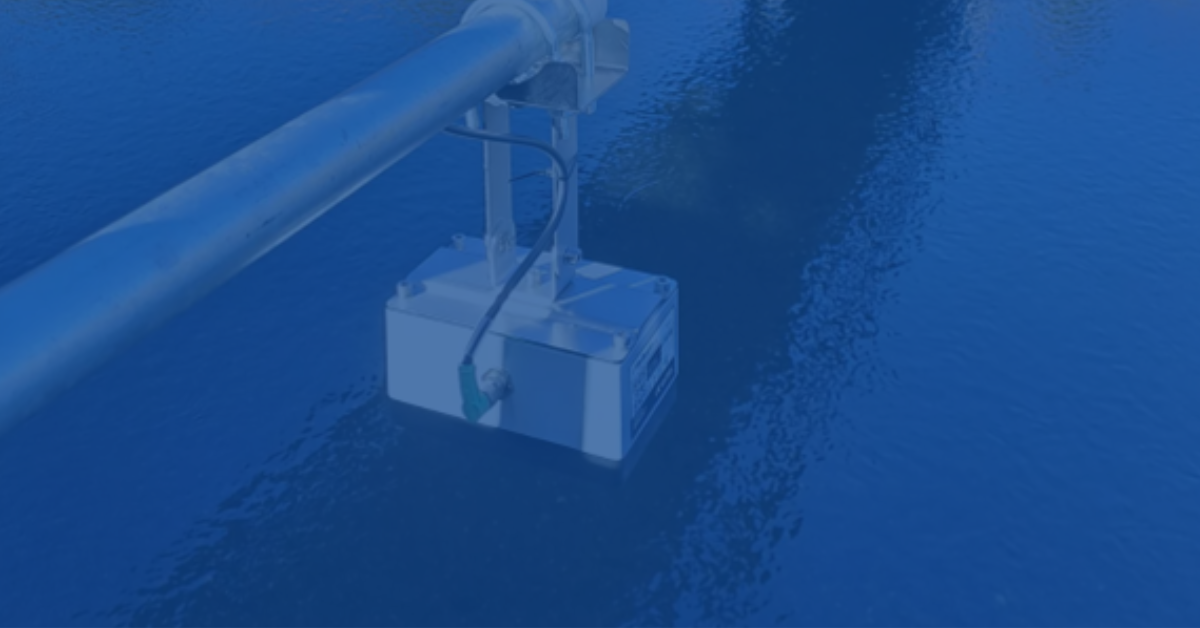
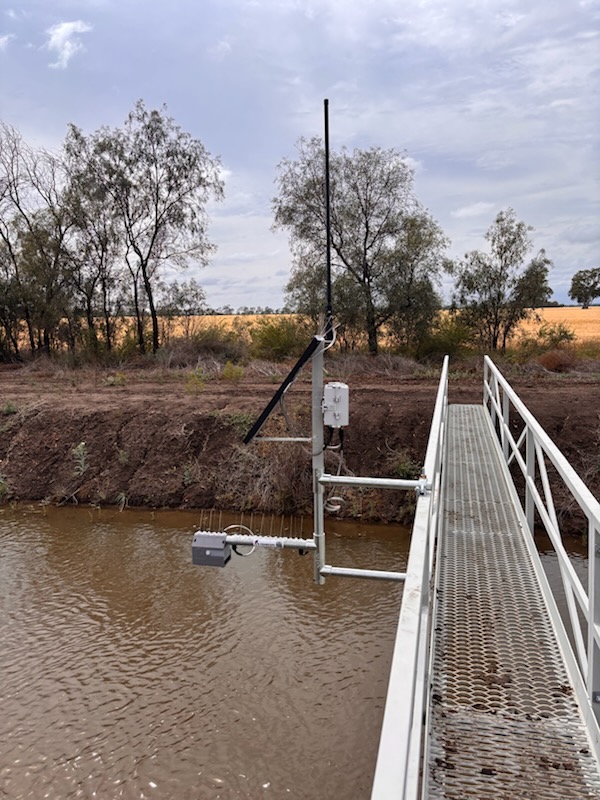
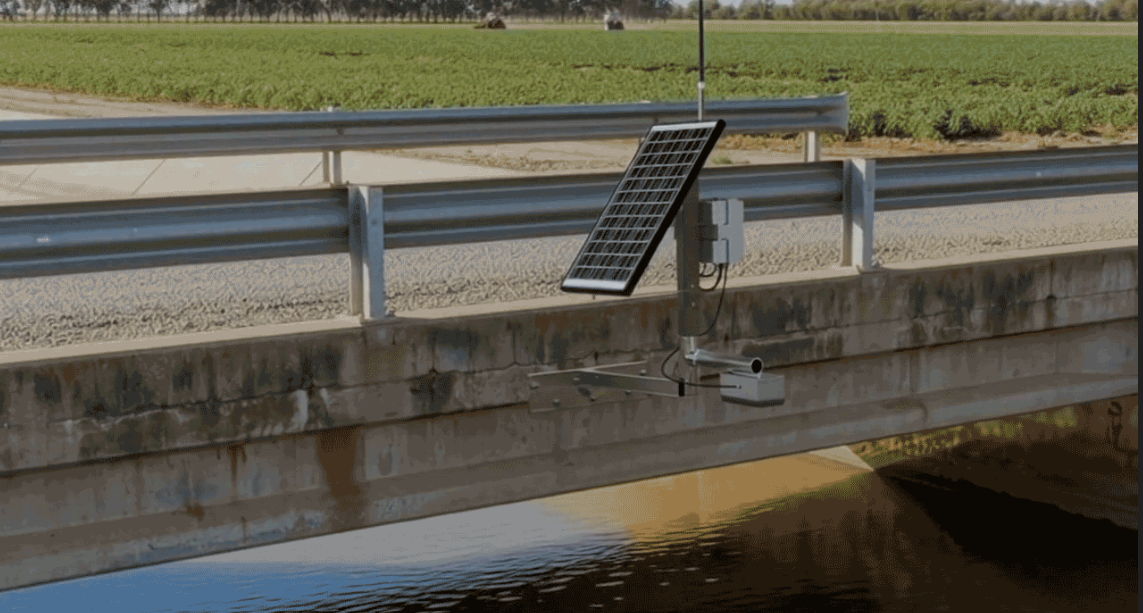
Measuring flow in an open channel usually means building a weir or a flume in it, which brings civil construction, approvals, and a structure that collects sediment from the day it goes in. SynaptiX® Flow, Novecom’s open channel flow monitoring system, measures flow from above the water surface instead. A radar sensor mounted on an existing bridge, culvert or headwall measures the distance to the water and the speed of the water beneath it. Combined with the channel profile recorded at installation, the system calculates flow rate and accumulated volume without anything entering the water.
We assess the site, survey the channel, install and commission the equipment, and deliver validated data structured for your reporting requirements. Deployment takes days rather than a construction program, and the system can be relocated when your monitoring needs change.
Data is transmitted over Cat M1 cellular or SynaptiX ConnectMESH, our carrier-independent mesh network, to the SynaptiX platform, where your team can view real-time dashboards, review historical trends, and export records.
By combining non-contact sensing, on-board flow calculation and remote telemetry, our open channel monitoring removes the civil works from flow measurement and keeps the data coming.
Nothing is built in the channel and nothing obstructs the water, so hydraulic performance is unchanged and sediment moves through as it always has.
The sensor sits above the water. There is no submerged equipment to foul, corrode or be damaged by debris during high flow.
Mounts to existing structures with minimal site disruption and moves to a new location when your monitoring priorities change.
System health is monitored remotely, so problems are identified before they leave a gap in your records.
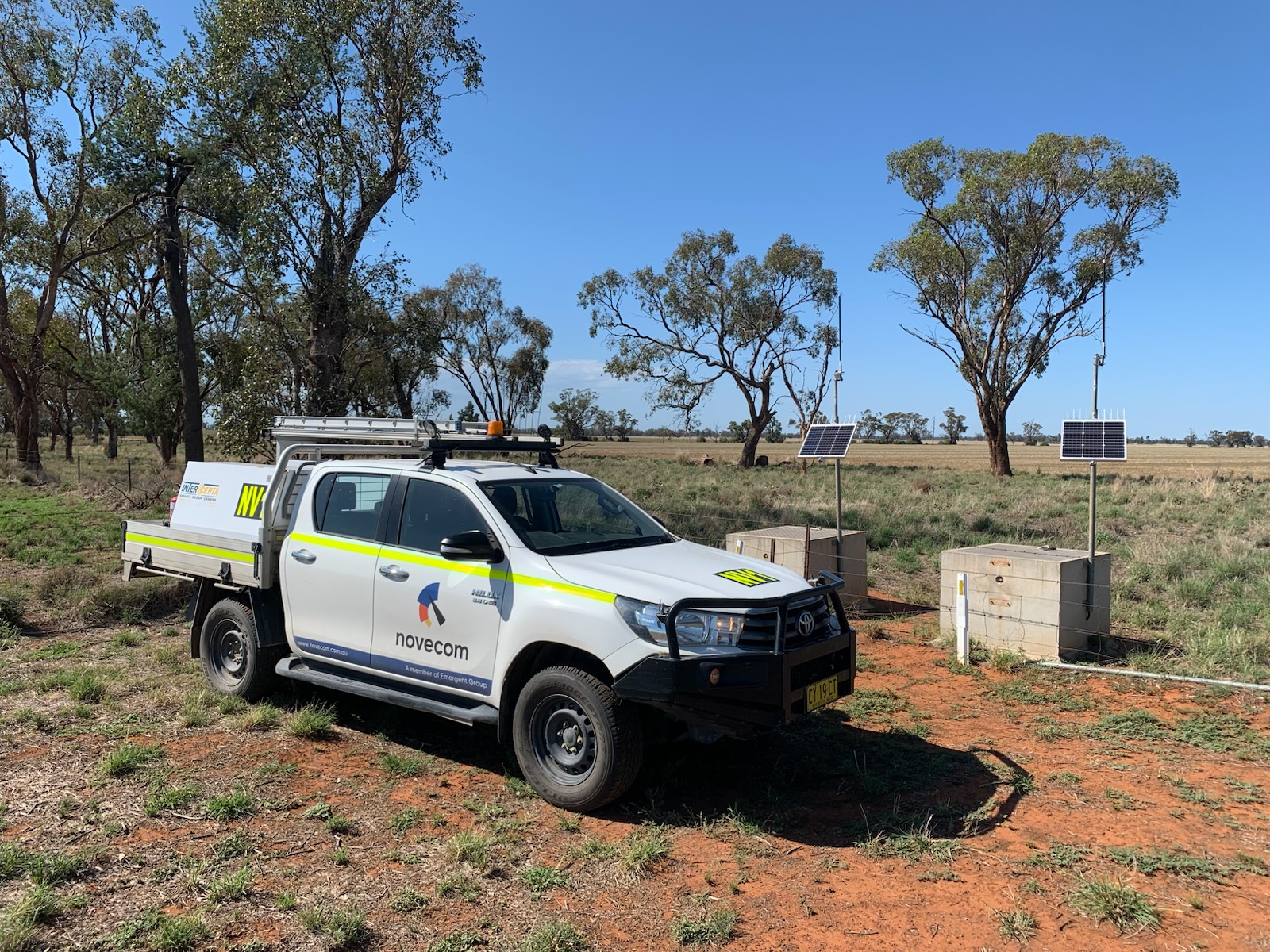
Designed and manufactured at our facility in Mayfield West, Newcastle NSW, and built for Australian heat, dust and remote conditions. SynaptiX Flow pairs a radar level and surface velocity sensor with a SynaptiX Collector field unit.
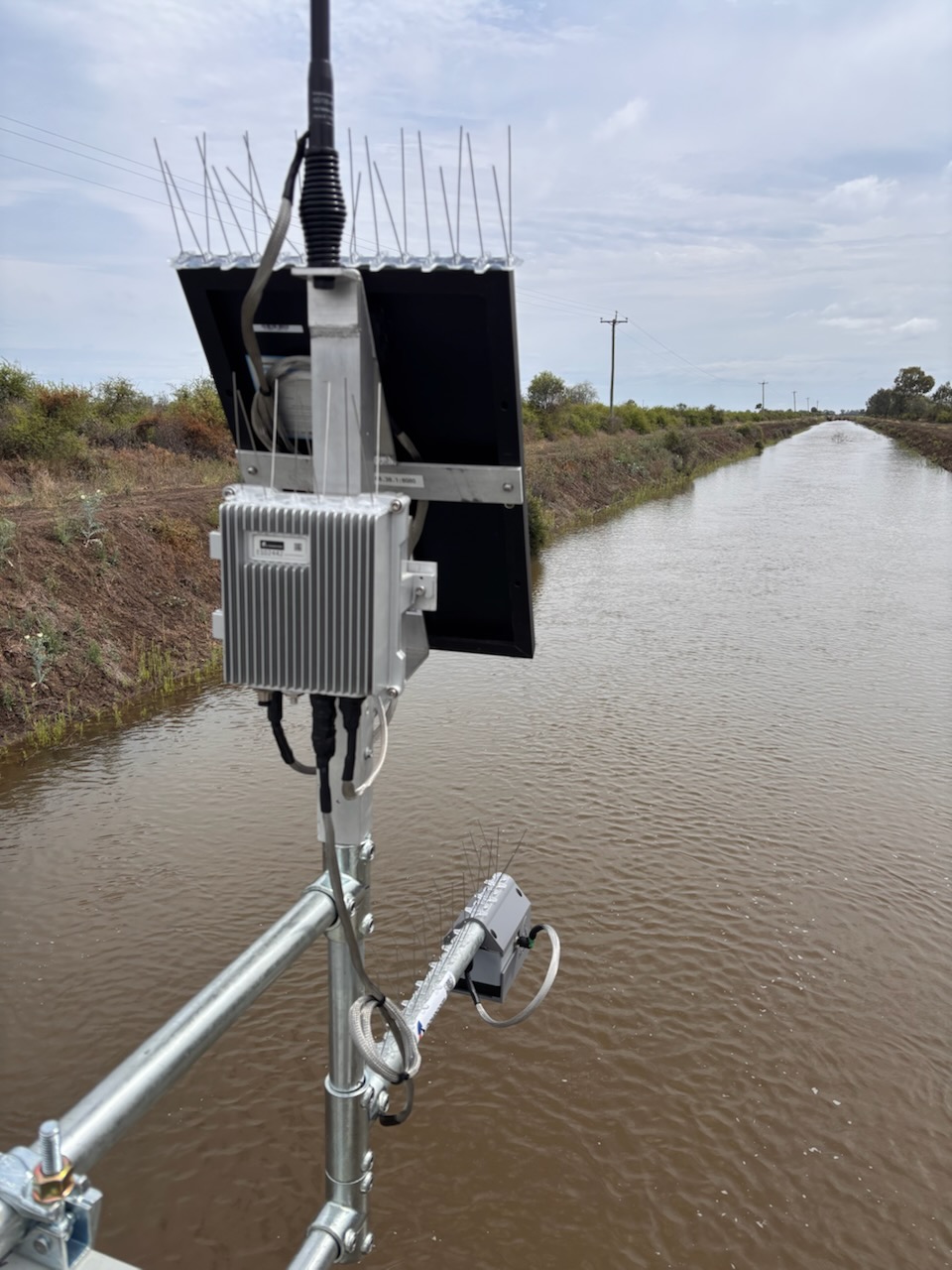
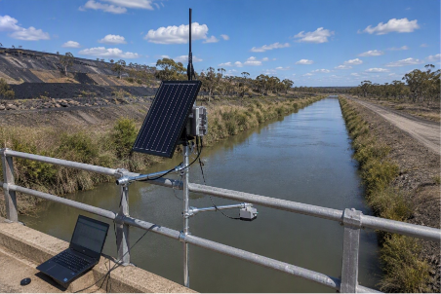
SynaptiX Collector, solar panel and radar sensor installed over an irrigation channel.
A single unit mounted above the water measures both the distance to the water surface and the speed at which the surface is moving. Level is measured from a continuous radar signal reflected off the water surface. Velocity is measured from the frequency shift in the signal reflected by the moving surface. Neither measurement requires contact with the water.
The channel cross-section is surveyed at installation, either by our team or by your own team using Novecom’s survey guide. The system combines that profile with live level and velocity readings to calculate instantaneous flow rate, average flow and total accumulated volume at the point of measurement. The flow calculation can be calibrated to suit the hydraulic characteristics of each site.
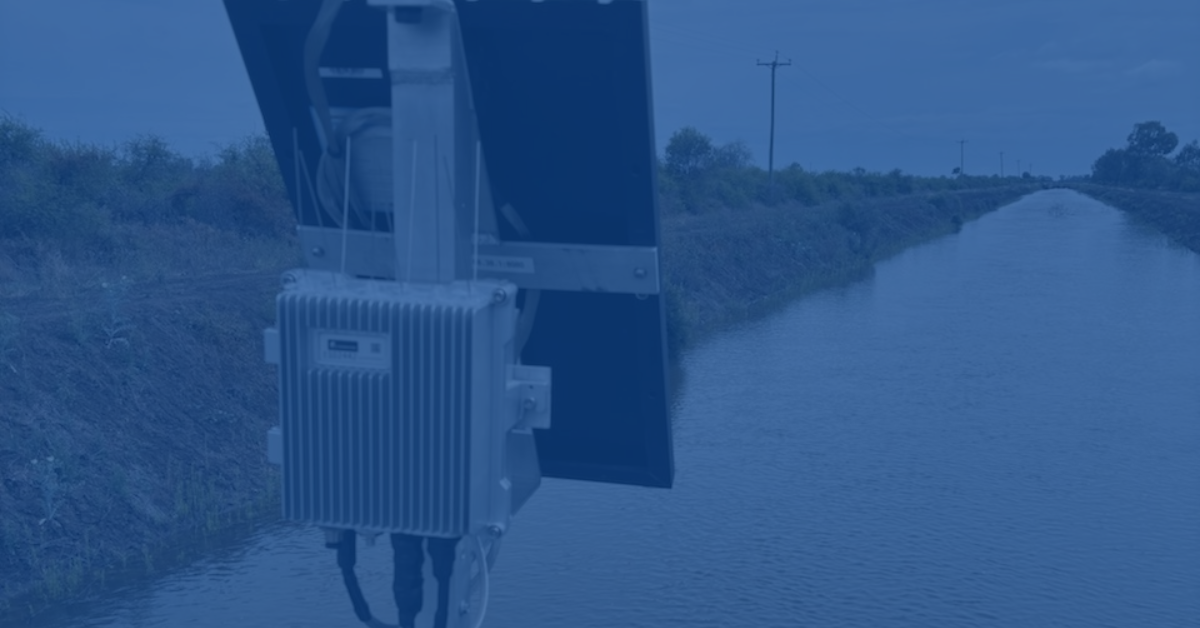
The radar sensor connects to a SynaptiX Collector, the field unit that powers the system and sends the data home. It manages solar charging and the 12.8 V LiFePO4 battery, logs data on site, and transmits over Cat M1 cellular or SynaptiX ConnectMESH to the SynaptiX platform. Because it runs independently of mains power, the system can be deployed on a remote culvert or floodway.
A sealed, IP65-rated enclosure and mounting bracket suit permanent or temporary installation on bridges, gantries, culverts and channel structures.
How far the water surface is from the sensor
How fast the water surface is moving
Measurement update: approximately every 5 seconds.
Novecom’s open channel flow monitoring is a managed monitoring program, not a hardware purchase. Your program covers everything from the first site visit through to validated data you can rely on.
Our quality management systems are independently certified under AS/NZS ISO 9001, ISO 14001 and ISO 45001 by SAI Global, with annual third-party review.
Every waterway carries a different obligation. Here is what our open channel monitoring measures in different environments.
Open channel flow is one part of a complete water monitoring program. Novecom designs and maintains water level, storage, quality and flow monitoring across mining, agriculture and infrastructure.
Open channel flow monitoring measures the rate and volume of water moving through a channel, drain, creek, canal or floodway. Unlike a closed pipe, an open channel is driven by gravity, so flow is calculated from the depth of water, the speed it is travelling and the shape of the channel it is travelling through.
Yes. Licensed discharge points, or LDPs, are the locations named in your environment protection licence where water is permitted to leave your site. Queensland environmental authorities use release points, or RPs, for the same purpose. The system measures flow rate and accumulated volume at these locations continuously, giving you a time-stamped record of what was released and when. It mounts to the existing headwall, culvert or channel structure, so the discharge point itself does not need to be modified. Sites with several discharge points can be monitored together under one account. Flow and volume are what the system measures. Any water quality sampling required under your licence conditions is separate.
A weir or flume forces water through a known shape so that depth alone can tell you the flow rate. Radar measurement does the same job differently. The sensor measures the water level and the surface velocity directly, then combines both with the surveyed channel profile to calculate flow. No structure is needed because the channel does not have to be reshaped.
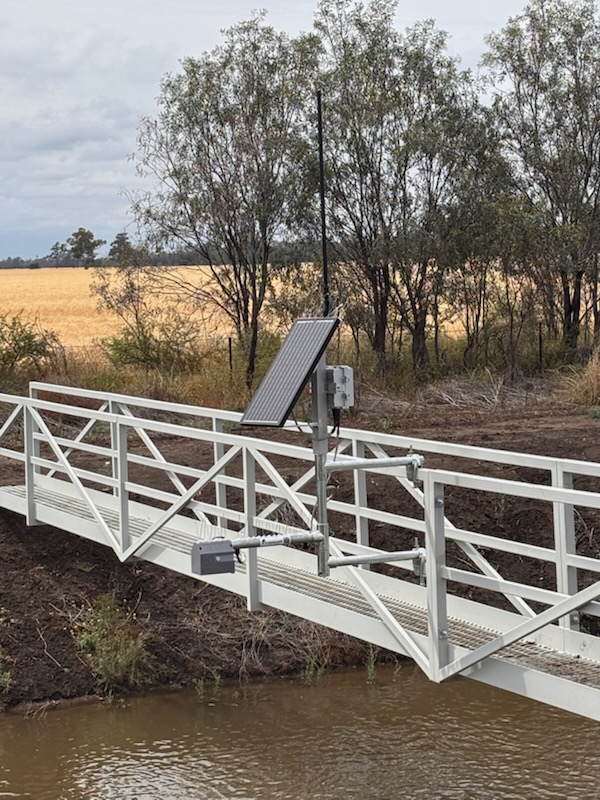
No. The sensor mounts to an existing structure above the water, such as a bridge, gantry, culvert or channel headwall. Where no suitable structure exists, a pole or bracket can be installed on the bank.
Data is available through the SynaptiX platform, with real-time dashboards, historical trends, exports for reporting and user access control.
Contact our team to talk through what you need to measure and where. No obligations, just insights.